The sale starts where the slot starts
There’s no separate POS to re-enter everything into. Whatever you charge on a booking, at the bar or in the shop lands in the same register, with the same customer and the same payment method.
Charge the slot, the beer and the racket on one screen. The receipt comes out of the thermal printer and the invoice is signed by the tax authority.
There’s no separate POS to re-enter everything into. Whatever you charge on a booking, at the bar or in the shop lands in the same register, with the same customer and the same payment method.
CLUB DEMO PÁDEL
Av. del Libertador 4250, Buenos Aires
CUIT 30-71823456-7
Monotributo
C
FACTURA C
0001-00001284
One button on the register row and the 80 mm receipt comes out. With Chrome in kiosk mode it prints straight away, no dialog: the front desk clicks once and tears the paper.
CLUB DEMO PÁDEL
Av. del Libertador 4250, Buenos Aires
CUIT 30-71823456-7
Monotributo
C
FACTURA C
0001-00001284
Load your tax ID and certificate, test the connection and flip the switch. From then on every receipt requests its authorisation code and prints with the voucher number and QR on it.
When the authority doesn’t answer, the receipt is still issued as a non-fiscal one and the error is stored. Nobody stands at the desk waiting on someone else’s service.
Every sale draws down stock. Rackets, balls, drinks: you know what’s left and what to reorder without counting boxes by hand.
Each of the club’s payment methods, kept apart. You open the register, close it, and the count tells you what should be in the drawer.
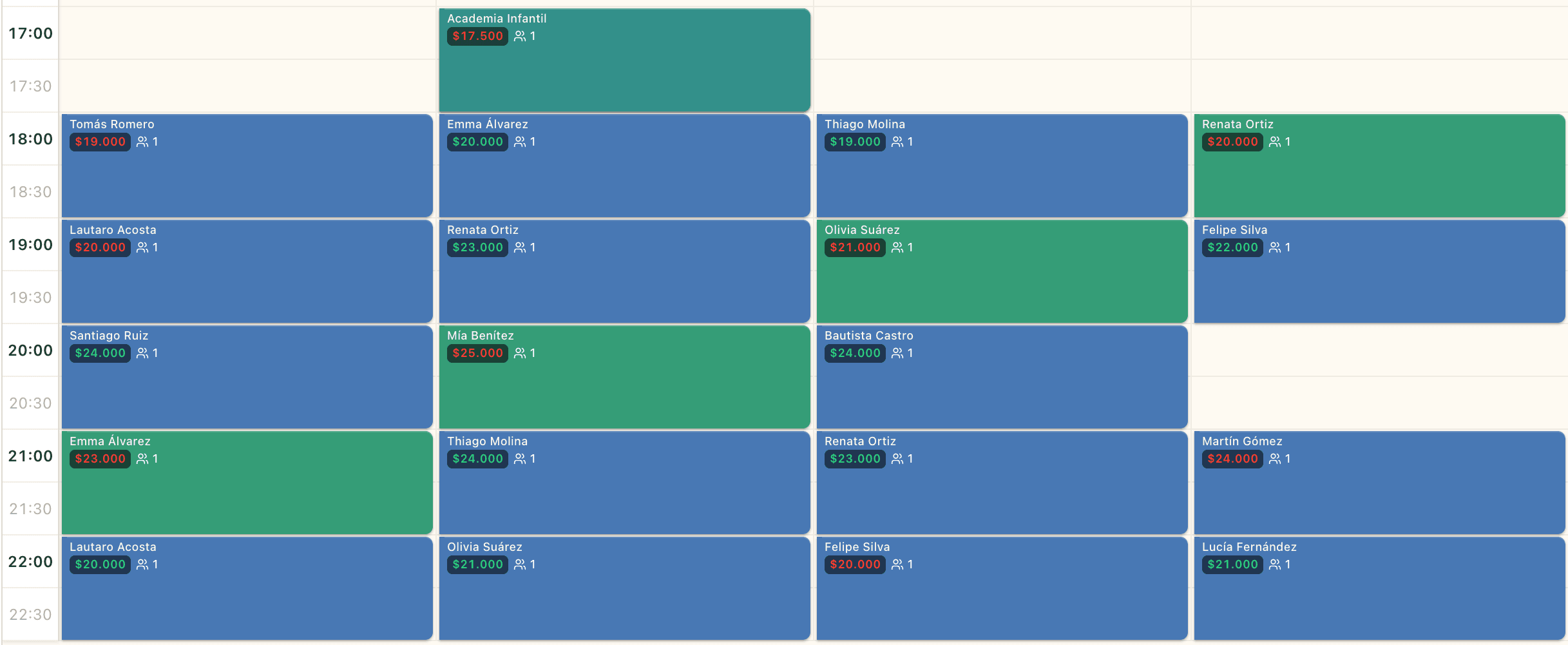
A club doesn’t only sell products: it sells court hours, lessons, memberships and, along the way, a soft drink. A generic point of sale knows nothing about any of that, so bookings get charged in one place, the bar in another, and at month end somebody tries to reconcile both in a spreadsheet.
In Repe there is one register. The 8pm slot, the beer afterwards and the racket the same player took home land on the same account and in the same end-of-day close. The receipt that prints is the one that gets archived, and if the club invoices, that paper carries its ARCA authorisation code.
The fiscal side is built so it never stalls the desk. The number is reserved before the code is requested, so a double click never burns an extra voucher; a reprint reprints instead of issuing again; and if the tax service goes quiet, the sale still closes and the reason it printed without a code is recorded.
Yes. The club loads its tax ID, VAT status and certificate, and from then on each voucher is authorised against ARCA and prints with its authorisation code, expiry and the mandatory QR.
Factura C and Tique — the ones that don’t break VAT out by rate. Factura B isn’t there yet: we’d rather not offer a voucher type before the per-rate breakdown is done properly.
No. Any 80 mm thermal printer the front-desk computer already sees will do. The receipt prints from the browser; start Chrome in kiosk-printing mode and it goes out without even opening the print dialog.
Yes, and that’s the recommended path. You configure the sandbox environment first, test the connection, and only then switch to production. Test receipts print marked as having no fiscal validity.
The receipt is still issued as non-fiscal, with its internal number, and the error is stored on the ticket. The customer leaves with their paper and the club isn’t blocked.
No. Before requesting the code the system checks whether that payment already has a voucher: if it does, the same one is reprinted. Fiscal numbering can’t be handed back, so it never gets spent twice.
Yes. Any row in the register can become a voucher: a booking payment, a bar sale or a standalone cash movement.
Yes. Products, prices, stock and movements live in the same place, and every sale draws it down. You can see what’s below its minimum before you run out of balls on a Saturday.
Yes. There’s a floor plan, tables and its own menu, so a bar with table service is handled like the counter, and everything ends up in the same club register.
Keep exploring